
#11 Qure AI: Rohit Ghosh on building a healthcare AI startup and how they are leveraging AI to save the world from Covid-19


#11 Qure AI: Rohit Ghosh on building a healthcare AI startup and how they are leveraging AI to save the world from Covid-19
SUBSCRIBE ON:
 Spotify
 iTunes
 Google Play
 Stitcher
Introduction to Guest
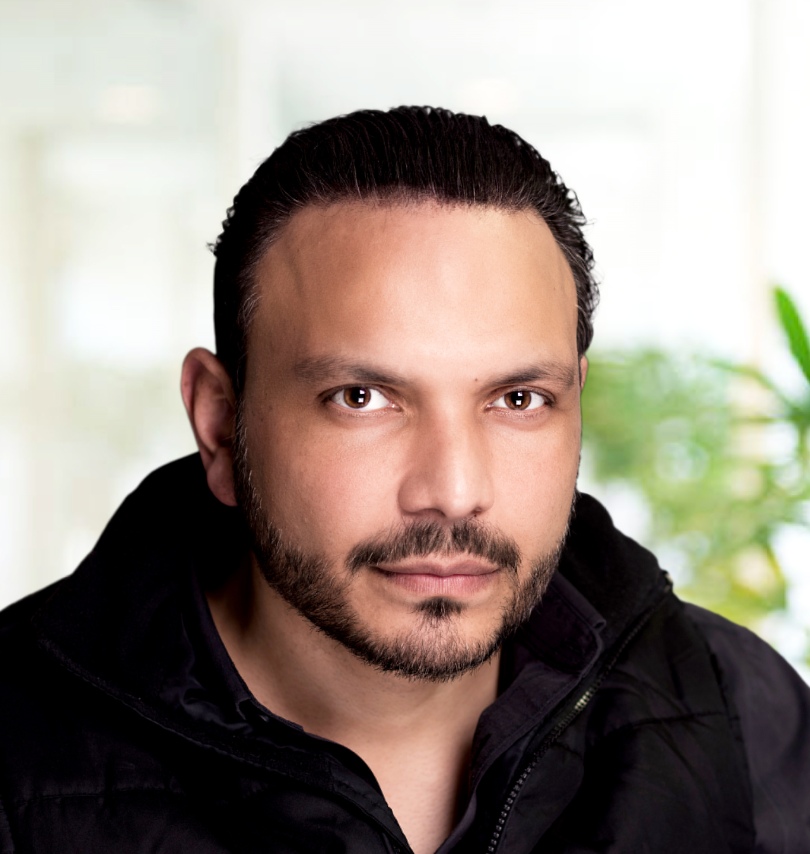
Rohit Ghosh is an IIT Bombay grad and Founding Member of Qure.AI -with a mission to make healthcare more affordable and accessible through the power of Artificial Intelligence. Qure.AI was just ranked by Forbes as one of the top 15 companies that are saving the world from COVID-19.
Previously, Rohit worked as an AI Scientist and was deeply involved in building R&D products in the computer vision area. He also worked as a Data Scientist for ListUp. Rohit has been widely involved in mentoring and teaching data science students. He also has 15+ publications in multiple journals worldwide.
The Call to Action
In 2014, Rohit graduated from IIT Bombay with a very lucrative job offer as an investment banker. An offer that Rohit wound up taking. However, after nine months working for the company, he had an epiphany. Rohit wanted to do something more meaningful with his life, to put forth his time and effort into a project more impactful, and on the edge. Rohit was also given the advice that at a young age, you can afford to take risks and try a few things that you’re interested in, for you had less liabilities. Not fully satisfied with his current situation, Rohit took this advice to heart. He left his job as an investment banker, found two other co-founders, and went all in on Qure.AI
Together with his new teammates, Rohit embarked on the scary, yet exciting, journey of making a huge impact in the healthcare industry.
Coming Up with The Idea
Before founding Qure.AI, Rohit knew deep down in his soul that the company he wanted to create must be impactful and meaningful, something beyond himself. Especially coming from India, Rohit knew he could make a difference, not just for his country, but for the rest of the world. With a vision to work in healthcare, Rohit needed a clearer vision on where to start. After a lot of trial and error, validation, and working on a plethora of different concepts, Rohit narrowed down his focus to radiology. He saw a massive gap in the market.
Rohit was also able to go deeper in computer vision and chest X-ray diagnostics using Artificial Intelligence. In terms of accuracy in AI models, he realized more data is key. Rohit also tested that the value they can generate with their product, and the people they can reach, was way more effective with computer vision and radiology. Radiology was also easier to explain to people and easier for customers to perceive. AI used for computer vision.
A model with limited use was soon brought to life yet constrained to only a few people.
Validating the Market
When they first got started, Qure.AI was seed funded. Rohit and his team took the first two years to dive into good quality research in making their product work, all while eliminating the stress of commercialization. All members of the founding team worked on different models and gathered more data. They published publications in the market to cultivate trust. Rohit stresses that trust is key, especially in the healthcare industry. Rohit built this trust by keeping transparency between what Qure. AI was building and the research they were conducting.
By being extremely honest through keeping all research out in the open, Rohit was able to build that trust needed inthe market.He also talked to a lot of stakeholders -hospital/healthcare providers, government officials, radiologic providers – to learn their pain points. This formula is how he narrowed down his first mission to tackle – Tuberculosis Diagnosis. In India alone, TD is a huge epidemic, there are almost 10 million cases. And in SouthEast Asia (SEA), there is a massive problem with x-rays and delays on scans. Many x-rays don’t even get reported. For example, if someone gets tested for Tuberculosis, they would have to wait an additional 10-15 days for their results. This delay can result in deterioration of health, spreading of the disease, and in worse cases, death.
Despite outsiders discouraging and pessimistic at times, Rohit and his team held their faith, and kept moving forward with their AI product and deep passion to help humanity.
Testing the Product
Rohit started by testing his Qure.AI product in the Philippines. In the Philippines, mobile chest x-rays are apparent, but radiologists on location are scarce. Radiologists travel in and out of the city for testing, then spend time uploading the scans to a cloud. This process takes 2-3 weeks. Not to mention a microbiology test then had to be completed if the patient showed positive Tuberculosis results. The whole process is painfully long and ethically not working.
With people falling out of the tunnel through this process, Rohit & the team found a way to massively speed up the testing. Using Qure.AI, the software can look at a chest x-ray and provide a Tuberculosis diagnosis in 30 seconds, collecting the results right then and there. If the results come back positive, the specialist can conduct a confirmatory microbiological test on the spot. Qure AI took a 15+ day process and drastically reduced the time into four hours. This is really an unbelievable feat, and a huge paradigm shift in what AI software has been able to achieve.
Challenges Encountered
Working in SEA, and many third world countries, the main challenge encountered by Qure is lack of internet. With internet connection scarce, Qure AI cannot rely on the cloud, which turns out to be only the first part of the challenge. The second part is the size of the product, finding a solution for it to fit with a portable X-ray machine. After a lot of hard work, Rohit and his team found a way to shrink the box to the size of a cookie box, making it easily deportable and easy to set up.
Another challenge Qure AI encountered was contacting radiologists in India, which was quite scarce. Unlike places in Europe such as the UK where an at home reporting infrastructure is in place to look at critical cases, India does not have the same system. With radiologists working short number of hours (only on call 8 a.m. to 2 p.m.), and with little WIFI connection, any diagnoses in India that required immediate attention are not looked after. Qure needed to find a way to get a radiologist to look at cases and report them in a much faster fashion. Astonishingly, Qure solved this problem through using WhatsApp.
After their ah-ha moment, Qure.AI software was implemented in hospitals. And at any time, a critical case was reported after 2 p.m., a message would be sent to the WhatsApp group. This completely changed how TD diagnoses are reported. Now, with everyone all in one group, radiologists can look at case comments and act accordingly. Who would have known joining an app such as Telegram or WhatsApp would be a major game changer when saving lives.
Fighting COVID-19
Since starting off with detecting Tuberculosis, Qure.AI has expanded to 28 different abnormalities, along with Covid-19. These abnormalities can include radiological manifestations of Covid-19 as well. When Covid-19 hit hard in March, Rohit knew his product could have a positive impact on diagnosing patients quickly, while tracking their recovery.
Through chest x-rays, Qure’s AI application can see if one’s lungs are improving or deteriorating. Their product has proved helpful in the ICU, where chest x-rays are easily scanned. On the scan, you can look at the percentage of the lung infected and compare the results to previous scans of the infected patient. In turn, monitoring the progression of the patient.
Qure now has a strong user base in many parts of the world such as: Mexico, the UK, Italy, Russia, Australia, and other places that have been hit hard by Covid-19. In less developed countries in SEA where there might be a lack of testing kits, Qure decided that those who are at the highest risk of losing their lives will be tested first. This has proved to be a huge advantage to parts of the world that don’t have enough kits to test people.
Advice for Industry Leaders
When you are creating a company, it is key to have an AI strategy in place with enough leverage to try/do different things. This advice is particularly for those leading organizations. Make sure there is someone within the company or organization who’s responsible for that strategy, while providing them the leverage to experiment. Really pinpoint what works and what doesn’t
Many times, companies fall into the hype of Artificial Intelligence, so make sure you think in terms of how AI will generate value, and how AI can benefit both you and other people.Consider the use cases for everyone listening, or else finding value will be difficult
Advice for Aspiring Entrepreneurs
If you’re young, take the risk now, or it will get more tough to take the risk later on in life. However, before you take the giant leap, begin small if you need to. Start a project on the side, validate the market, and check in with yourself to see if you’re enjoying the potential venture. There is always the chance that starting your own business is not something you’d like in the long run. By keeping your day job, you can still go after your goals, save some money, and gear up to make the giant leap.
Another piece of advice is the ability to learn. Five years ago, Rohit had no idea what machine learning was. His learnings came about from adapting and picking up new skills on the go.
Rohit’s journey, ambition, and ability to help others is incredible — and it is safe to say that he is just getting started. To get in touch with Rohit and/or to learn more about QURE.AI, visit the site: http://qure.ai/
We would also love to hear what you’ve taken away from this week’s inspiring episode.
About the Host
Ari Yacobi is a data scientist, a teacher and a storyteller who has spent his career at…Read the Bio

My spouse and I stumbled over here different website and thought
I might as well check things out. I like what I see
so i am just following you. Look forward to looking over your web page repeatedly.
There isn’t really such a thing as a bad choice,
just a choice that’s right for you.
The burden of disease among adults aged 70 and above is considerably greater than for younger adults.
Asphalt shingles are prevalent in residential roofing,
but their environmental impact raises concerns.